Showing posts with label Other Plants and Flowers. Show all posts

Tuesday, April 17, 2012

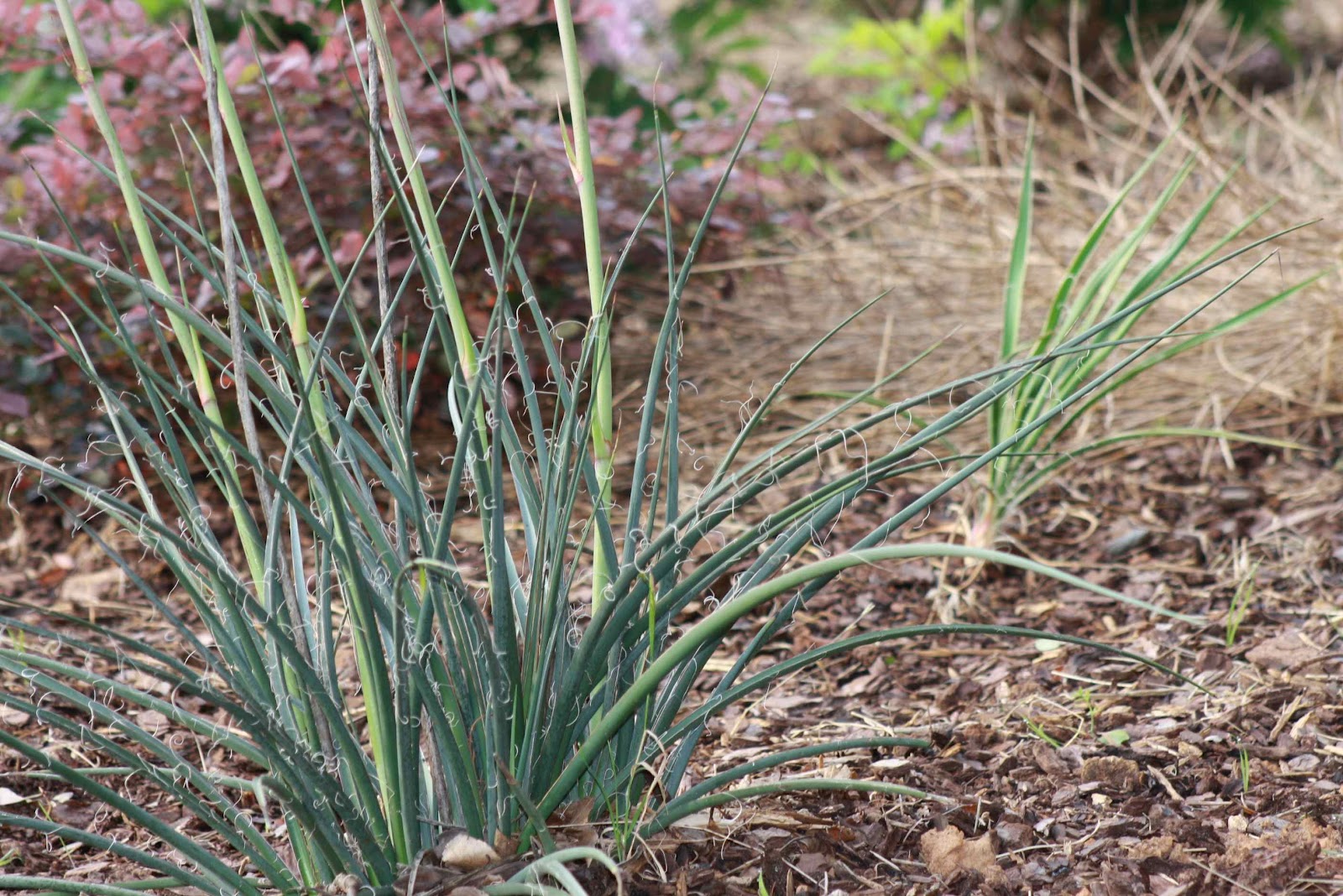
Mother and Child

One of my plants had a baby!

I found this in one of the rose beds:


I think this is the mother:

Red Yucca (Hesperaloe parviflora)

You can see above that I've moved the baby over to the mother.  

It made the mother very happy:


She's beaming:


I'm happy to report that mother and child are both doing fine.

Wednesday, April 11, 2012

I Dream in Color

I dreamed of a garden.


And after a bit of trial and error, I realized roses did well in the sunny soil here. 


So then I began to dream of a rose garden.


And after some work, a few years of waiting, some mistakes, and a few changes, my dream has begun to come true.


I'm still changing things, and still waiting.


But when I dream, I dream in color.


Start a garden.   


And you'll be dreaming in color, too. 

Thursday, March 29, 2012

Come Hither

Years ago, a friend of mine moaned to her mother that no male was paying attention to her.  What's a girl to do?  Her mother replied, "Give him the come hither look."  She then gave a low, flirty stare out of the corner of her eyes.  I laughed, thinking "come hither" was a joke.

But a few years later, that same friend and I liked the same young man.  And while we were all together one day, I saw her give him the "come hither" look.  Obviously, she knew her mother wasn't joking, because he asked her out!

Darn it!

Golden Barberry (Berberis thunbergii 'Aurea')

Whenever I see a photo of a garden that I think is beautiful, I try to analyze why it works and what it is that I find so appealing.  I may not be able to copy the garden, but I can possibly copy the concept.

I looked at one of my favorite photos for a long time.  It was of a central pathway with plantings on either side.  I felt as if I could figure out why that garden looked so beautiful, perhaps I could mimic some of those design qualities in my pathway garden.


I noticed a couple of things.  One, they repeated the same color on both sides of the pathways, and repeated that color all the way down the pathway.  Although it looked like it was just an abundance of color and flowers, in reality it was a finely tuned design.  The repeat of the same color all the way down the pathway drew the eye forward, and also begged you to walk down the path.  I nicknamed it the "come hither" design element.

The "come hither" element in my pathway garden comes from the golden barberries (berberis thunbergii 'Aurea').  Bright, with small leaves, they don't initially hit you as a big part of the design scheme.  But, I'm hoping, that subconsciously the repeat of these plants pulls you forward.


You can see three in this picture.  There are actually six of these bushes in this garden.

I love these golden barberries.  I love their lemon-lime coloring, their naturally rounded shape, their small size (mine are between 2-3 ft high and wide), and their little leaves.  I think their lime green coloring goes well with so many other plants, too.  And come fall, they turn a beautiful burnt orange.  The only thing I can say against them is they have thorns.  But it seems like everything in my garden has thorns, so I'm used to that feature.


Golden barberry is deciduous, and grows in zones 3 through 10.  They are my "come hither" plant.  Can't you see them giving you a low, flirty stare?

Tuesday, March 27, 2012

It's Blooming!


I'm a plopper.  I admit it.  When I first started my garden, I was a planner, but I soon became a lover of plants, and so my plopping days began.  In fact, my walking garden was designed to be a plopping garden!

Marcia of Birds, Blooms, Books, etc., generously gave me some purple irises last year.  I plopped them in the walking garden.  I have other irises in that garden.  Mostly white ones, but also some purple ones.  As a plopper, I didn't remember exactly where I had placed Marcia's irises.   So when purple irises started blooming, I wasn't sure if it was my purple irises, or the ones I received from Marcia.


But because I blog, I can look back to see which iris was here last year.


This is the iris I received from Marcia.  It's a beautiful, deep, royal purple, with frilly petals that have a white edge and a pure white top.  I love it.  Thanks, Marcia!

Plopper, planner, novice or expert - blogging is wonderful because:

  • I've met some of the sweetest, most generous, and helpful people.  All with an interest in a hobby I love.
  • I've got a record of my garden.  That has really helped me see the differences in the garden from year to year.

If you're not a blogger, but have been thinking about it, I say - try it!  At the very least, start taking pictures of your garden.  You will be amazed how useful - and enjoyable - it can be to have a daily record of your garden and its blooms.

Has having a daily pictorial of your garden helped you?

Sunday, March 25, 2012

Shortcut

My sister loves to take shortcuts.  No matter where she is driving, she knows a shortcut.  Sometimes she knows so many shortcuts, I think it takes us longer to get there than if we had just gone the regular route.

Well, that's kind of what happened to me.  I tried to take a shortcut, and in this instance it worked, but it's not the advised way to go.

You see, when I started gardening, I realized that nothing would live in our soil.  It was pure clay.  Brick almost.  What's a girl to do?  Amend is the regular route.  But I wanted a shortcut.


I really knew nothing about my crossvine (Bignonia capreolata) when I bought it, except it was a plant native to many southern states, including Texas.  It seemed to me that native plants that might grow in the naturally hard soil.  And I could skip a step.

Except for a few areas (which still includes where this vine is planted), my soil is nicely amended now.  But it took a long time to get it that way.  And miraculously, the crossvine turned out to be a beautiful shortcut.

Crossvine (Bignonia capreolata)

If you want to try a crossvine, here's some thing you might want to know:
  • Sometimes it won't bloom until it reaches the top of the structure.  I had to wait a few years for mine to reach the top of the wall and start blooming, but its evergreen leaves were pretty to look at while I waited.
  • It attaches itself by little tendrils with sticky pads, so it will climb almost anything.  I put mine on a trellis to start it growing up the outside wall, but after it got the hang of it, it just took off.
  • It's a natural hummingbird magnet.
  • Evergreen, it grows in zones 6 through 9, up to 40 ft, in full sun to partial shade.
  • Blooms in spring, and again in fall.

Mine is allowed to just grow and hang down upon itself.  As it takes pruning easily, I've seen others train their crossvine neatly across their house, up an arbor, draping a gazebo, across the top of a fence, or climbing a tree.  It is said if you cut into the stem, you can see a cross sign, thus the name crossvine.

Versatile.  Tough.  Attracts hummingbirds.  Evergreen.  Easy.  An orange spectacle when it blooms.  My shortcut.

Saturday, March 24, 2012

A Foundation Favorite

Want to know one of my favorite foundation plants?


'Bay Breeze' Dwarf Indian Hawthorn (Raphiolepis indica).  Also known as 'Hines Darkleaf'.


Mine are planted in a hedge between my front porch and the sidewalk.  I love that:

1)  They stay small, so I can sit and still look over them, but have a sense of privacy.
2)  They're evergreen, so even in December they are cheerful to see.
3)  They bloom in spring.

They're almost no care.  I have been known to throw some fertilizer under them, and I have also been known to forget to do that for years at a time.

'Bay Breeze' (Hines Darkleaf) Indian Hawthorn

I have to shape mine to keep them off the sidewalk, but other than that, they are truly one of the easiest plants in my garden.  Don't shape them before they bloom in spring - you might cut off that year's blooms.


They love full sun, but can be planted in part shade.  And any plant that loves full sun in hot Texas really, really loves the sun!  I have some planted in a place that is full shade, and they are leggy and rarely bloom.  I keep thinking I will need to put something else in that place, and I will eventually, but it's hard to pull out a plant that is still evergreen with lots of leaves on it, even if it is unhappy.


The only problem I can see with this plant as a foundation planting is the fact that they attract bees when they're blooming.  It doesn't bother me, but if I had a lot of visitors or was allergic to bees, I might not want these near my front door.

'Bay Breeze' grows in zones 8 to 11, to 3 ft. tall and wide, with a nice rounded shape.

Friday, March 23, 2012

Passed Along

I'm always a bit skeptical of pass-along plants.  You know the ones.  Plants that get passed to new gardeners, usually because they multiply so quickly the passer-alonger is happy to get rid of a portion of them.  I have been the recipient of some pass-along plants, and it didn't take long to realize I needed to pass on most pass-along plants.


But these were different.  I just couldn't seem to pass them by.  Sweet little pink flowers with leves like shamrocks.  They were blooming in several areas of my daughter's yard, looking so sweet and cheerful.  I decided to take a few, and asked her permission.  She was thrilled that I wanted something from her yard.


I knew I might regret that action.  But so far, I've just been enchanted.  They're blooming with the pansies right now.  I'm actually thrilled that they survived - they weren't planted for a few days after digging them up.  And they weren't actually dug up - more like ripped by hand.  But here they are - survivors.  I wonder if the fact that they can survive just about anything is a sure sign of invasiveness.


These are oxalis, or wood sorrel.  And yes, I might regret this impulse.  I'm fully aware they might become a bit invasive.  But with such a sweet little flower, would I really care?

Thursday, March 22, 2012

Lost and Sometimes Found

I try very hard to keep up with plant labels.  Really, I do.  I have an organizer just for this.  Divided into the different sections of my garden, I can usually find the labels fairly quickly.

Well, not always.

I know there are much better ways to do this than keeping the labels.  But I like to see the photos, and from where I purchased the plants.  And sometimes seeing the label jogs my memory.

Unfortunately, I don't always put them in the organizer in a timely manner.  Which means, sometimes tags are placed here and there, stuffed in places that I think I'll come back to later, when I have the time to put them in the organizer.

And sometimes I lose them.  :(

And sometimes I find them again!  :)


Like the name of this daffodil.  I love this daffodil.  I love it's pure white color, and the scent was so sweet!  I was enchanted by it.  And it bloomed perfectly alongside the carnations.  I wanted to make a note of its name, so I could get more next year.

But I looked, and looked, and looked, and could not find its tag.  Finally!  Two weeks later - I have found it!

Thalia daffodil

Thalia daffodil is the name of this daffodil!

But I seem to have lost the name of this iris.

Unknown iris

If I find the tag, I'll be sure to let you know its name!  Because I want to remember it myself!  Doesn't it look pretty with the scabiosa?

And I'll try to re-organize my tags.  When I find the time to get to that.

Do you have any plant label organizing tips for me?

Friday, March 16, 2012

Azalea Trail Photos!

Want to see some color?  Want to see spring?  It's here!!!


Yes, it's almost time for the annual Tyler Azalea and Spring Flower Trails!  So, I goofed off today and drove around, enjoying the colorful display of azaleas, tulips, daffodils, violas, camellias, Lady Banks roses, wisterias, dogwoods and Japanese maples all in their spring finery.  Enjoy the show!

Azaleas line the streets - they're everywhere!


Orange tulips were HUGE - and gorgeous!  I saw them in several gardens.


This Japanese maple was green, instead of the usual red.
Click HERE for more info on the yellow azalea.  


A private garden.  Isn't it beautiful?  
Click HERE to see more of this garden from last year.


You can see some wonderful views by walking around.


In fact, some of the gardens are right on the street.


Or you can just drive around and see the show.


This garden was along the street, too.  A perfect place to take family photos.


Hope you enjoyed seeing the colors of spring!


Tuesday, March 13, 2012

What's That Smell?

I walked outside the back door, and suddenly stopped.  I smelled something.  Something sweet, but with a tang.  Where was it coming from?

Trying to figure it out, I tried to remember which blooms' scent I had noticed lately.  It couldn't be the daffodils that had enchanted me with their fragrance just yesterday - they were planted in a different bed.  Slowly, my gaze moved along the garden, eliminating each plant.  Not the lamb's ear, not dianthus.  The irises were in mid-bloom - some had finished blooming, others had not started.  The roses hadn't started blooming yet.  Same with the cannas.  The lilies were starting to come up, but no blooms on them either.  This was getting mysterious!

Finally, I realized.  It was the hollies!


Normally, holly bushes get all their attention in the winter.

But right now, my holly bushes are getting all the attention they could ever want from multiple pollinators.  It was amazing to see not only bees, but flies, wasps, crane flies, and many other different flying insects being attracted to their strong perfume.


These holly bushes are Dwarf Burford hollies (Ilex cornuta 'Dwarf Burford').  I have clipped them into different shapes over the years as they grew - starting with a ball, then a pyramid, then a cube.  Now they are too tall for me to reach the tops, so they are clipped as a cube on the bottom, with the top having a bad hair day - sticking up and about every which way.  (Uh, yes, that's done on purpose!)


Dwarf Burford hollies grow in zones 7 to 9, up to 8 ft tall and wide.  Mostly grown as a hedge, but I've also seen them attractively limbed up as small trees.

Hollies are great plants to have for winter interest.  But as I realized today, that's not the only time these plants are interesting.  Pollinators love them in spring.  And their scent fills the air.

Monday, March 12, 2012

Until Another Storm Comes Along

I love my pear tree, but mostly for sentimental reasons.  And because I look at it through eyes of love, I think it's beautiful.  But if I were a pear tree expert, I would have to admit it was ugly.


Oh, the blooms are pretty enough.  Gorgeous, really.


But this tree has had a hard life.


It started out well enough.  A Mother's Day present from my daughter (and the best part was my son-in-law dug the planting hole!).  I don't remember the variety, except it was not a Bradford pear.  A couple of years later, a storm blew it down.


Miraculously, though, three tree trunks began to come up.  Three is a great symbol to me in the garden, because I have three children.  And so, I let the three trunks remain.  I also learned that pears trees are often grafted, so there is no way for me to know the type of pear tree this is now.


This tree may only hold a temporary position in my garden, as it is weak.  But for now, I'll enjoy its pretty blooms, the shade it gives, and its three trunks.  At least, until another storm comes along and blows it down, again.  Then I'll beg for another one some Mother's day!
Related Posts Plugin for WordPress, Blogger...